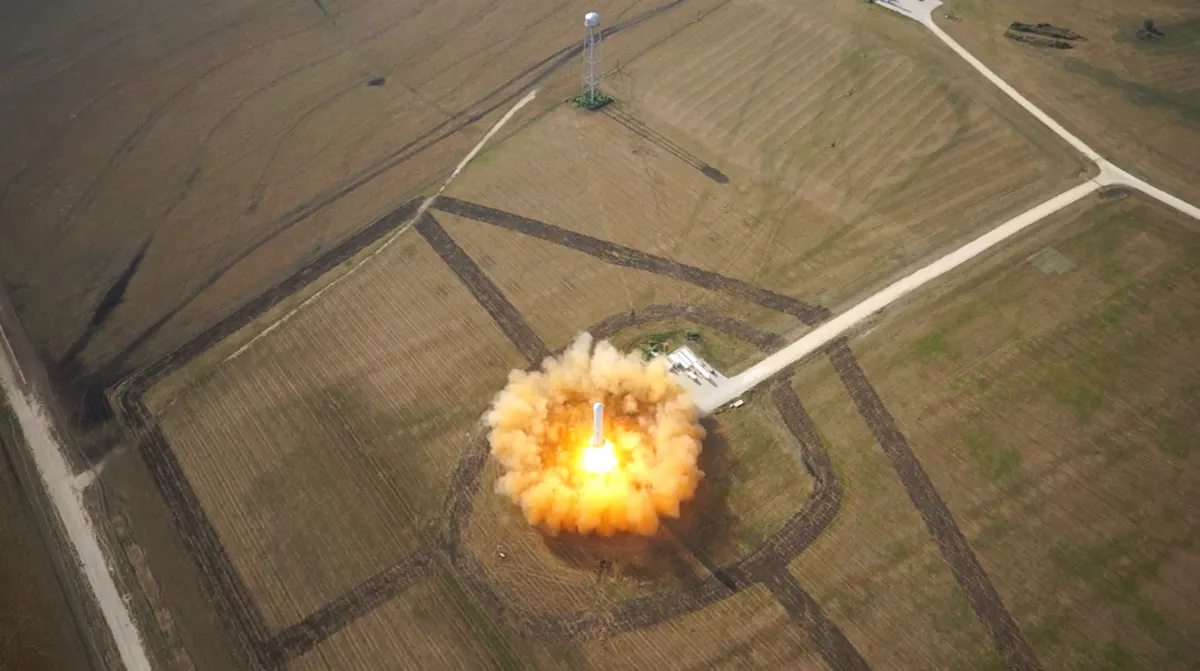
The New Glenn rocket explosion Thursday night at Launch Complex 36, Cape Canaveral Space Force Station lit up the Florida sky and could be seen from miles away, destroying a vehicle that Blue Origin had flown only twice before and placing the company’s growing NASA contract portfolio under immediate scrutiny.
| Detail | Facts |
|---|---|
| Incident type | Hot-fire ground test anomaly |
| Location | Launch Complex 36, Cape Canaveral SFS |
| New Glenn flights prior to incident | 2 (this was third rocket in series) |
| Injuries | None reported |
| NASA Moon Base contract (Phase 1) | $188 million + $280.4M option |
| Artemis lunar lander contract | $3.4 billion (awarded 2023) |
Blue Origin’s formal statement called it an “anomaly during today’s hotfire,” per NDTV’s account of the company’s release. Jeff Bezos posted on X that all personnel were safe and said the company would “rebuild whatever needs rebuilding.” Brevard County Emergency Management called it an anomaly posing no public threat.
No injuries were reported. The FAA, which oversees commercial space operations, had not commented by the time of publication.
What the New Glenn Rocket Explosion Means for Artemis
The timing is particularly awkward. Just one day before the New Glenn rocket explosion, NASA Administrator Jared Isaacman had publicly praised Blue Origin’s role in the Artemis program and disclosed a $188 million Moon Base contract for the company. That contract carries an option period worth an additional $280.4 million and calls for Blue Origin to deliver two rovers to the lunar surface using its uncrewed Blue Moon Mark 1 Endurance cargo lander.
Blue Origin is one of four companies sharing nearly $1 billion in Moon Base awards. Astrolab received $219 million, Lunar Outpost $220 million, and Firefly Aerospace a separate contract to deliver JPL’s MoonFall drones. Thursday’s incident puts Blue Origin’s slice of that program on hold pending an investigation.
Separate from the Moon Base work, Blue Origin also holds a $3.4 billion Artemis lunar lander contract awarded in 2023, covering the crewed Artemis V mission. That program’s timeline was already tied to a 2028 target for returning astronauts to the Moon’s surface. Isaacman said Thursday that NASA would assess impacts to both Artemis and Moon Base programs as more information becomes available.
A Rocket Still Early in Its Flight History
The New Glenn rocket explosion hit a vehicle that had completed only two previous flights. Blue Origin intended this third rocket in the series to serve as the platform for launching NASA landers to the Moon, making the loss more than just a test setback. The company is working through the early reliability phase that every new heavy-lift vehicle must survive before it can anchor a crewed lunar program.
Elon Musk, whose SpaceX competes directly with Blue Origin for launch contracts and NASA work, responded on X: “Most unfortunate. Rockets are hard.” SpaceX’s own Falcon 9 and Starship programs endured multiple failures before achieving operational cadence, so the observation carries some weight.
Hot-fire tests are standard procedure, conducted with engines ignited while the vehicle is bolted to the pad, but they carry real risk. Root cause is unknown. Blue Origin says it is already working to find it.
The key question now is whether the investigation closes fast enough to keep Blue Origin’s Moon Base delivery schedule intact. NASA has three other contractors in that program, but the 2028 crewed landing timeline leaves little room for extended delays on a rocket that was supposed to be flying lunar cargo before astronauts follow.