The Iran war market impact has spread across every major asset class over the past 100 days, pushing U.S. inflation to its highest rate in nearly three years, sending long-dated Treasury yields to levels not seen since before the 2008 financial crisis, and leaving global oil markets exposed to a supply bottleneck that no strategic reserve release has fully plugged.
| Metric | Level / Change |
|---|---|
| Brent crude vs. pre-war price | +36% |
| WTI crude vs. pre-war price | +~50% |
| U.S. CPI (12 months to April 2026) | 3.8% (up from 3.3% in March) |
| 30-year Treasury yield intraday peak (May 19) | 5.197% — highest since July 2007 |
| Strait of Hormuz daily crude flow (2025) | ~15 million bpd, ~34% of global trade |
| Coordinated strategic reserve release | ~400 million barrels, 32 nations |
Iran War Market Impact: Stocks Shrug, Bonds Don’t
Wall Street has, broadly, looked past the war. The S&P 500 recovered its initial losses and pushed to new all-time highs, driven by AI-related earnings momentum and the relative insulation of U.S. companies from direct energy cost exposure. Semiconductor stocks have been the standout beneficiaries, with South Korea and Taiwan receiving growth upgrades on the back of surging demand for compute infrastructure.
European equities have fared worse. Higher energy import costs hit margins more directly on the continent, and the war has reinforced the divergence between U.S. tech leadership and a European industrial base that runs on pricier fuel.
Bond markets have been less forgiving across the board. The 30-year U.S. Treasury yield briefly touched 5.197% on May 19, its highest intraday print since July 2007, before pulling back slightly the following session. The 10-year yield hit 4.667% the same day; the 2-year reached 4.12%.
The move is drawing attention from institutional investors. A Bank of America fund manager survey published the week of May 19 found that 62% of global respondents expect the 30-year yield to reach 6%, a level not seen since late 1999 and roughly 85 basis points above where it was trading at the time of the survey.
The Hormuz Problem Has No Easy Fix
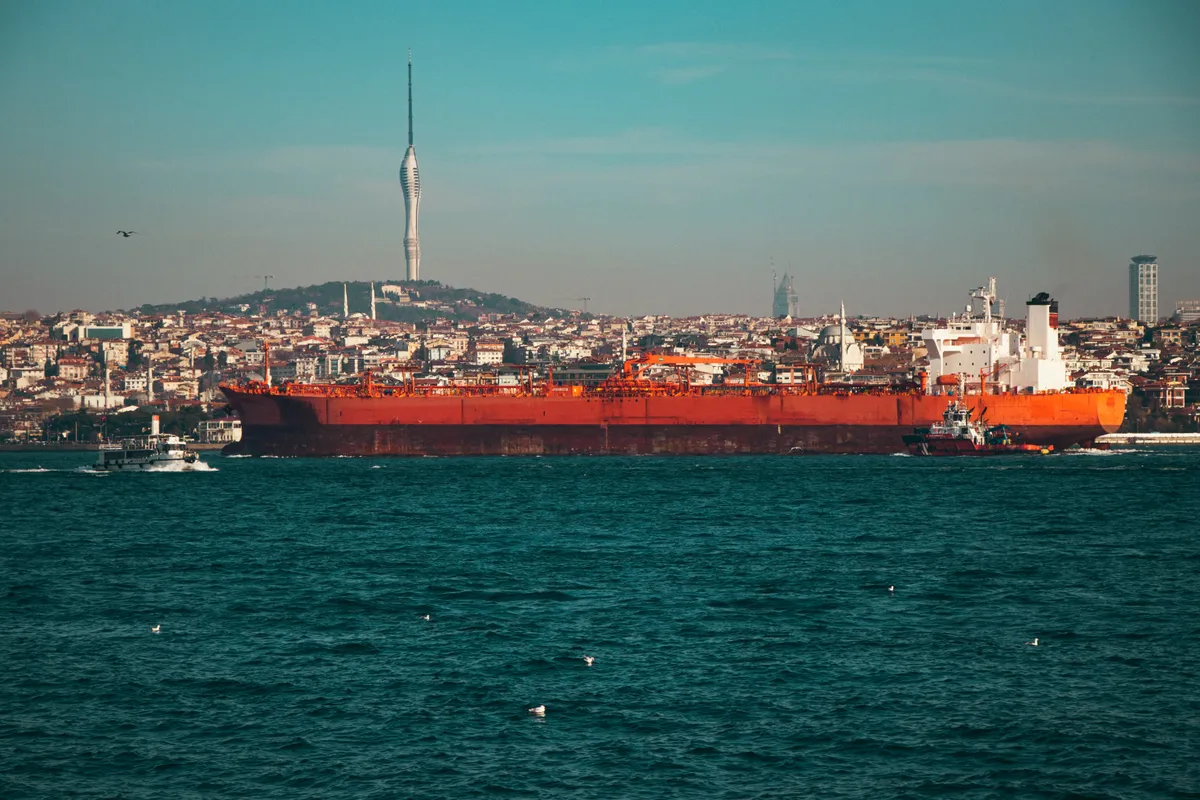
The Strait of Hormuz closure sits at the center of the energy disruption. According to the International Energy Agency, roughly 15 million barrels per day of crude oil flowed through the strait in 2025, representing nearly 34% of global crude trade. A further 5 million barrels per day of refined products moved through the same chokepoint. Most of those flows were bound for Asia.
The only meaningful bypass options belong to Saudi Arabia and the UAE, whose operational pipelines can redirect an estimated 3.5 to 5.5 million barrels per day around the strait. That capacity covers, at best, a third of the disrupted crude volume. The arithmetic is uncomfortable.
In mid-March, the Trump administration announced the release of 172 million barrels from the U.S. Strategic Petroleum Reserve, part of a coordinated approximately 400-million-barrel release by 32 nations, described as the largest in history. The U.S. SPR held close to 414 million barrels as recently as December 2025, according to U.S. Energy Information Administration data. Drawing it down at this pace raises its own questions about buffer capacity if the conflict extends further.
Oil prices have retreated from wartime highs but remain elevated. Brent crude trades about 36% above its pre-war level; WTI is up nearly 50%. PVM Oil Associates analyst Tamas Varga warned that if inventories continue to drain through June and reach critical operational levels, a move back above $100 per barrel becomes likely. U.S. crude exports and sanction waivers on Russian and Iranian oil have helped cap the rally so far, but those offsets have limits.
Inflation Prints Are Moving, and the Iran War Market Impact Is Now in the Data
The Iran war market impact is now showing up in hard economic data, not just asset prices. The Bureau of Labor Statistics confirmed U.S. CPI rose 3.8% for the 12 months ending April 2026, accelerating from a 3.3% annual rate in March. That is the highest reading in nearly three years, driven substantially by energy costs.
Germany and India have both moved to intervene on domestic energy prices. In the U.S., the Federal Reserve faces a familiar bind: inflation pushing upward while the economic outlook clouds from demand destruction and supply chain disruption.
The Iran war market impact on longer-term growth depends heavily on how quickly the Strait of Hormuz reopens. Varga’s framing is direct: the strait must reopen to ease supply shortages and, with them, inflationary pressure. Every week it stays closed narrows the options and depletes the buffers that have kept crude below its theoretical ceiling.
If ceasefire talks stall into July and inventories hit operational lows, the oil market faces a different set of conditions than the ones that allowed equity markets to shrug off the first 100 days.