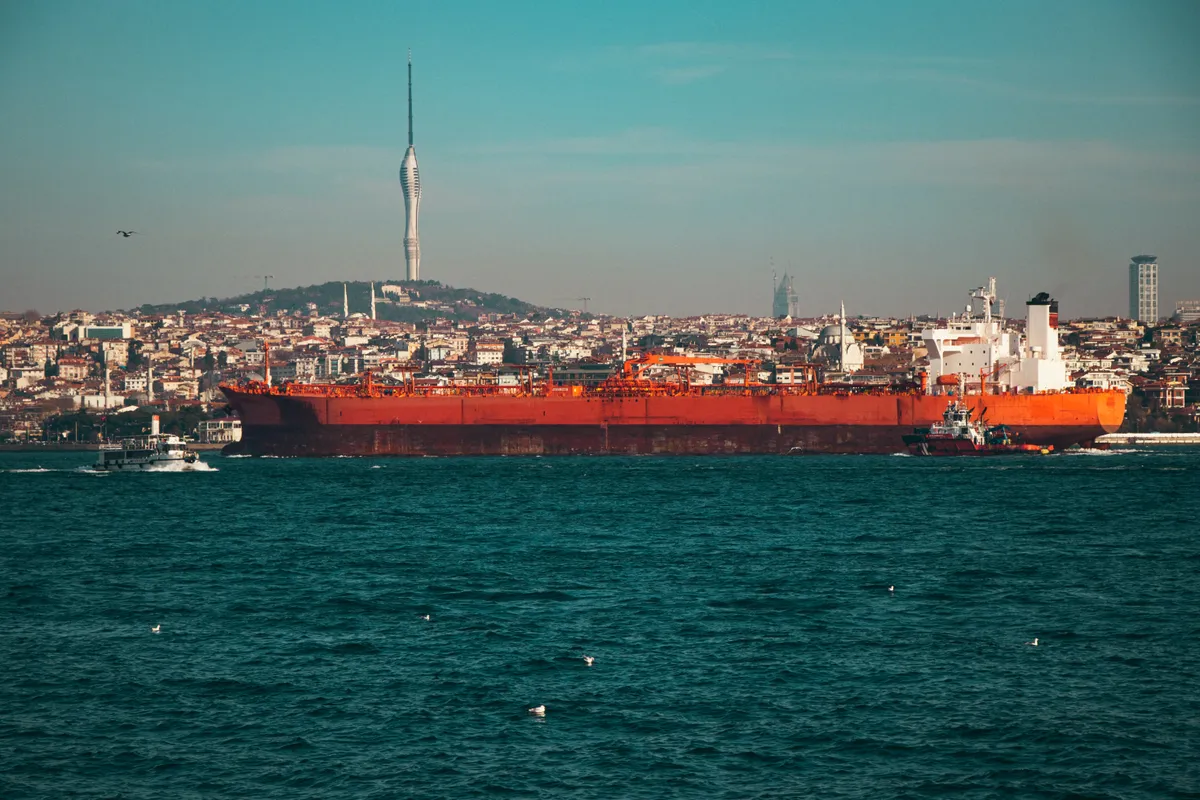
Prediction market traders have effectively written off any near-term resolution: Kalshi now prices a 66% chance that Strait of Hormuz traffic does not return to normal before January 2027, a sharp reversal from optimism just weeks ago when bettors expected the waterway to clear by summer.
| Metric | Value |
|---|---|
| Odds traffic normal before Aug 2026 (now) | 21% |
| Odds traffic normal before Aug 2026 (two weeks ago) | 66% |
| Odds traffic normal before Jan 2027 | 66% against |
| Kalshi: U.S.-Iran nuclear deal before Sept 2026 | 37% |
| Definition of “normal traffic” | 7-day moving avg above 60 ships |
Two weeks ago, the same Kalshi contract had a 66% chance of normalizing before August. That number is now 21%. The market’s definition of normal, sourced from IMF PortWatch transit data, requires the seven-day moving average to clear 60 ships through the strait. It hasn’t been close.
What Moved the Strait of Hormuz Traffic Odds
The catalyst was Sunday’s exchange of strikes between Iran and Israel, the first since April’s ceasefire. Iran fired missiles at northern Israel, citing repeated Israeli attacks on Lebanon. Israel responded with what it called a large-scale strike on strategic defense systems. By Monday, Iran’s foreign ministry said strikes had stopped, but traders barely moved the odds.
There was more happening at the waterway itself. The United Arab Emirates intercepted Iranian missiles for the first time since the ceasefire began, on Monday May 4, adding another layer of regional escalation traders had to absorb.
Then there is the corridor question. Iran’s Islamic Revolutionary Guard Corps issued a new map with an expanded zone of Iranian control over the strait, warning vessels to use only IRGC-designated shipping corridors or face what it described as a decisive response. That kind of assertion over transit routes tends to keep commercial shippers on the sidelines regardless of diplomatic tone.
Project Freedom Paused, Nuclear Deal Odds Still Low
The U.S. military operation to physically move stranded vessels through the strait, which the administration dubbed “Project Freedom,” has been paused. Trump halted it at the request of Pakistan and other countries, citing progress toward what he called a Complete and Final Agreement with Iran. The pause removes one near-term mechanism that could have accelerated Strait of Hormuz traffic recovery.
On Truth Social, Trump argued Iran is losing roughly $500 million per day with the strait closed, framing that as reason to believe Tehran wants a deal. He also suggested the blockade stays until a final deal is signed. “The Blockade will remain in place, and in full force and effect, until a ‘Final Deal’ is reached,” he wrote Monday.
Kalshi puts the odds of a U.S.-Iran nuclear agreement before September 2026 at just 37%, rising to 51% before 2027 and 65% before 2028. That timeline matters because traders appear to treat a nuclear deal as the structural prerequisite for any durable normalization of shipping.
Rival platform Polymarket was more optimistic in late April, pricing a 45% chance of traffic returning to normal by end of May and a 67% chance by end of June. Those windows have now passed without resolution, which may partly explain why Kalshi’s longer-dated contracts have hardened.
Trump also told reporters he thinks the strait “could be” closed through Labor Day but called it unlikely, adding he expects a quick resolution. His words moved the market less than his actions: a paused military escort operation and a blockade kept in place pending negotiations suggest the strait reopens on Iran’s timeline, not Washington’s rhetoric.
The next hard data point is whether the seven-day ship count approaches the 60-vessel threshold before the August contract expires. If it doesn’t, the January 2027 contract becomes the market’s focal line.