Ship Has Reached Tenerife
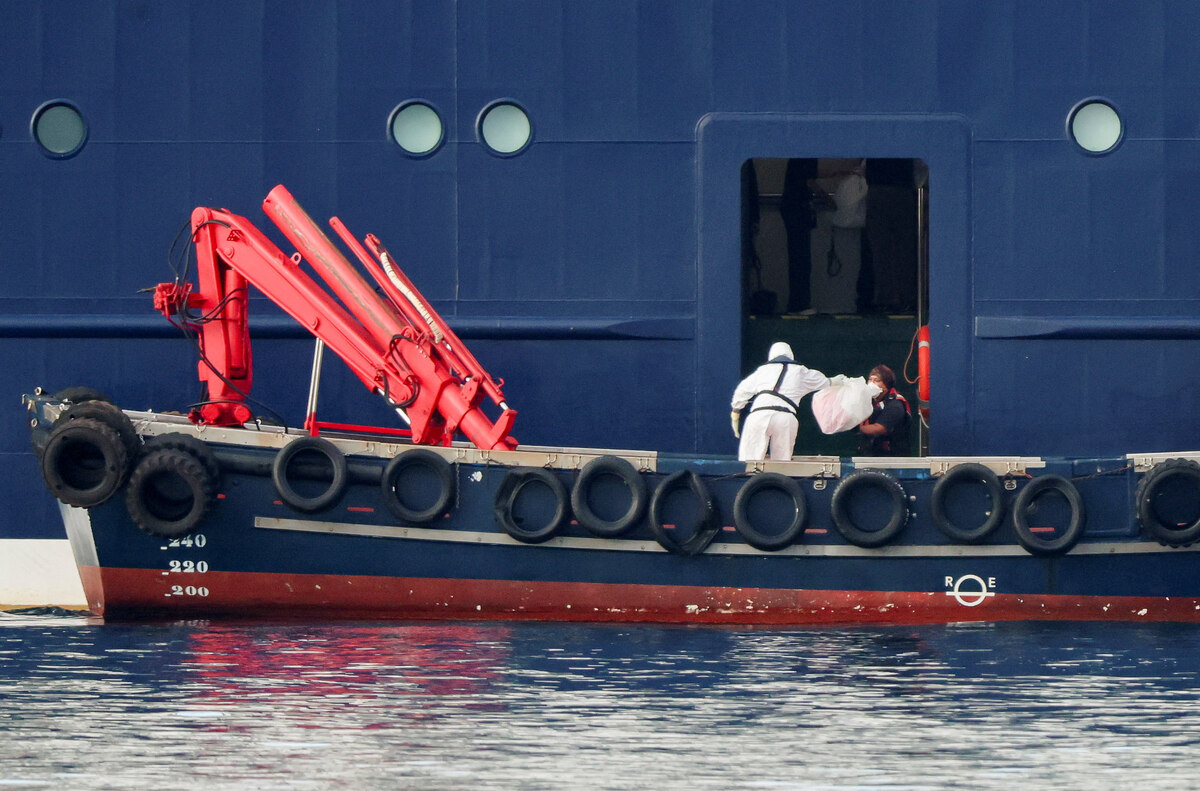
The cruise ship Hondius, affected by a hantavirus outbreak, has entered the port of Granadilla in the south of Spain’s holiday island Tenerife. Live footage from the state broadcaster RTVE showed the ship’s arrival in the early morning.
From Granadilla, the people on board the Hondius, including several Germans, are to be transported under strict security measures to a nearby airport and immediately flown back to their home countries. (dpa)
Cruise Passengers Fear Stigmatization
In the days since the hantavirus outbreak on a cruise ship in the Atlantic, some of the Spanish passengers have grown concerned. However, they fear not so much infection, but how they will be received ashore upon their return. The trigger is sensational media reports and mocking memes that publicly vilify the passengers aboard the Hondius.
“When you look at social media—that is, they want to blow the ship up,” a passenger from Spain told the Associated Press by phone. “They want to sink it.” He worried about being stigmatized as a virus carrier, someone best avoided—or worse. Because of these concerns, the man preferred to remain anonymous, just like another Spanish fellow traveler.
“You see what’s happening outside, and you realize you’re steering straight into the eye of a hurricane,” she explains. “Many people forget that there are more than 140 passengers inside. In reality, there are 140 people.” (ap)
WHO Chief Assures: “No New Covid”
Spain’s Health Minister Mónica García, Interior Minister Fernando Grande-Marlaska and the head of the World Health Organization (WHO) had come to the island to oversee the complex operation. WHO Director-General Tedros Adhanom Ghebreyesus assured that hantavirus is not a pathogen comparable to the coronavirus. In a message addressed directly to the people of Tenerife he emphasized: “This is not a new Covid.” The risk for people on the island is low—especially since no new suspected case has appeared on the cruise ship.
Initially it was said that the ship would anchor off the port for safety reasons. The Spanish Merchant Marine nevertheless granted permission for entry into the harbor during the night. (dpa)
How High Is the Risk of Spread in Europe?
Even if Andes virus were transmitted by evacuees from the ship, the virus is not easily spread further, “so it is unlikely that there will be many infections or a large-scale outbreak in the population,” reported the EU health agency ECDC. The risk for the general population in the EU from the spread of Andes virus due to the outbreak on the Hondius is “very low.”
Additionally, the natural reservoir of Andes viruses, the rice rat Oligoryzomys longicaudatus, is not present in Europe. “Therefore, it is not expected that the virus will be introduced into the rodent population and transmitted from rodents to humans in Europe,” said ECDC expert Thomas Hofmann.
“The combination of isolation, contact tracing and medical monitoring should keep the situation relatively well controlled,” said microbiologist Roman Wölfel from the University of the Bundeswehr in Munich. According to the Federal Ministry of Health, there is a single-digit number of people on board with German nationality. (dpa)
All Passengers Classified as High-Risk Contacts
Following a deadly hantavirus outbreak on a cruise ship, all passengers are being precautionarily classified as high-risk contacts. This was announced by the European Centre for Disease Prevention and Control (ECDC) on Saturday. The ship is expected off the Spanish island of Tenerife on Sunday. Passengers without symptoms should be transported back to their home countries with specially organized transports, where they must go into home quarantine. Regular scheduled flights are not envisioned for the return journey. (rtr)
What Is Special About Andes Virus?
The different hantavirus types in Germany are mostly transmitted through dust contaminated with rodent excreta. A large portion of infections, according to the Robert Koch Institute (RKI), occur without symptoms or with nonspecific symptoms. But the viruses can also cause fever with bleeding and kidney damage. In the most common virus type in Germany, far less than 0.1 percent of those infected die, while for a rarer variant it is 0.3 to 0.9 percent. There is no human-to-human transmission for these virus types.
The number of hantavirus diseases reported nationwide varies greatly from year to year. The average annual number of new cases between 2010 and 2019 was 1.3 cases per 100,000 inhabitants.
On the Hondius, another hantavirus type appeared: the South American Andes virus. “It is the only hantavirus for which limited person-to-person transmission has convincingly been described,” said Jonas Schmidt-Chanasit of the Bernhard Nocht Institute for Tropical Medicine (BNITM) in Hamburg. It seems that close and prolonged contact with the infected is decisive, “especially in the domestic environment, among couples, family members or in caregiving or medical care.”
“The hantavirus is primarily an environmental infection, and even in rare cases of person-to-person transmission it does not behave like a highly contagious respiratory virus,” stressed Scott Weaver of the University of Texas Medical Branch (USA). Andes virus belongs to a group of hantaviruses whose infection can lead to nausea, vomiting, coughing, a lung disease and death. According to the RKI, there is no approved vaccine or specific therapy against hantaviruses. Symptoms can be treated, however. (dpa)
Resistance From Politics in Spain
As during the Covid period, some people do not trust the assessments of medical experts. The Spanish group “Iustitia Europa,” known for its resistance to restrictions during the pandemic, called for blocking the Hondius from docking at Spanish harbors. “The Canary Islands must not become Europe’s health laboratory,” the group wrote on the X platform. “We demand transparency, responsibility, and protection for Spaniards to avoid repeating past mistakes.”
Others take a more defensive stance. The regional president of the Canary Islands, Fernando Clavijo, told the Spanish newspaper El País that he would sleep again only after the ship has left Spain and all passengers are on their way to their respective quarantine destinations. Madrid’s regional president, Isabel Díaz Ayuso, contradicted the decision to move the ship’s 14 Spanish passengers to a military hospital in the capital, where they should be kept in quarantine. (ap)
How the Passengers’ Return Journey Should Unfold
Medical staff are to first examine the people on board for acute illness symptoms, as the Spanish authorities stated. If none are found, the passengers will be disembarked in groups of up to five people. According to García, they must wear FFP2 protective masks and may bring only light carry-on baggage.
By bus, they will then travel to the airport a few minutes away. There, the strictly isolated individuals, together with their respective compatriots, should immediately board the provided aircraft and be flown back to their home countries. According to the WHO, all flights are to depart on Sunday and Monday, as a bad weather front is expected to move in later. Upon arrival, all evacuees are likely to have to enter quarantine, since a full de-escalation due to the long incubation period may only be possible after weeks.
As soon as the people are off board, the Hondius should immediately resume its voyage and steer toward the Netherlands, under whose flag it sails. It will be there that the body of a German passenger who died on board will be removed from the ship. The disinfection of the ship will also be carried out in the Netherlands. (dpa)
Virus Outbreak Triggers International Concern
Hantavirus is usually transmitted by rodents, but can also jump from person to person with close contact. The outbreak of the South American Andes variant on the small cruise ship triggered global concern—even more so because it reminded people of the coronavirus pandemic. Especially in the Canary Islands, people feared possible infection with the deadly virus.
Yet this case differs from the onset of the Covid-19 pandemic more than six years ago. Even if Andes virus were transmitted by evacuated ship passengers, the EU health authority ECDC says it is not easily spread, “so it is unlikely that there will be many infections or a large-scale outbreak in the population.” The risk to the general population in the EU from spread of Andes virus is “very low.”
In the Hondius case, the WHO reports six confirmed hantavirus cases and two suspected cases. Three of the eight people have died. Among the deceased are an elderly Dutch couple and the German woman. Since more than 30 passengers and crew members have disembarked during layovers, authorities are now worldwide searching for potential suspected cases. (dpa)
Spanish Health System Was the Decisive Factor
The WHO had asked Spain to allow people on the Canary Islands to disembark, as the archipelago offered the first potential destination along the ship’s route with top-tier health care. Cape Verde, where the Hondius had last anchored, did not want to take the passengers due to insufficient medical facilities there.
The Hondius began its south Atlantic voyage on April 1 in Ushuaia, in the southern reaches of Argentina. Ten days later, a Dutchman died; his wife left the ship during a stopover at St. Helena and flew to South Africa on April 24, where she died shortly thereafter in a hospital. According to the ship operator Oceanwide, the German woman died on May 3. The WHO suspects that the infection chain originated from the deceased Dutch couple, who may have contracted the disease ashore before boarding in Argentina. (dpa)
Argentina: Infection Not in Tierra del Fuego
Where people contracted the virus remains unclear. According to local authorities in Argentina, the origin of the hantavirus outbreak on the cruise ship does not lie in the Argentine province of Tierra del Fuego. “The probability that the infection occurred here is practically zero,” said Juan Petrina, the Director of Epidemiology in the southernmost province’s health ministry.
The Dutch couple who died from the infection had, after months of travel across Argentina, Chile and Uruguay, arrived in Ushuaia on March 29 and boarded the Hondius on April 1. They had shown initial symptoms by April 6, but the hantavirus incubation period is at least two to three weeks. “These timelines do not fit an infection in Tierra del Fuego,” said Petrina. (dpa)