Since 1997, 2.6 million fertility treatments have been carried out in Germany. The cause of infertility lies mostly with the man.
afp | In Germany, since 1997, almost 434,000 babies have been born after fertility treatments. This corresponds to the population of two cities such as Saarbrücken and Chemnitz together, according to the German IVF Registry on Saturday in Düsseldorf, citing current data. Today, mathematically, there are one to two children in every classroom who were conceived with the help of fertility medicine.
As a “milestone,” the IVF Registry described in its current yearbook that the multiple birth rate after artificial fertilization has fallen below ten percent for the first time. This means a lower risk for mothers and children. While after successful treatment, in the past two or more embryos were often transferred, today usually only a single embryo is transferred into the uterus to achieve a pregnancy.
In 2017, 22 percent of all births achieved through in vitro fertilization (IVF) were multiple births; by 2023, this share dropped to 9.3 percent. Multiple pregnancies carry the risk of miscarriages and premature births or developmental disorders in the child.
Treatments such as in vitro fertilization and intracytoplasmic sperm injection (ICSI) with donor sperm are therefore increasing. After 1,129 treatments in 2018, their number had almost tripled to 3,177 cases in 2023.
The Cause of Infertility Lies Mostly With the Man
In more than half of the cases, the cause of infertility lies with the man, often due to limited sperm quality. The number of treatments for solo mothers who want to raise their child without a partner, as well as for lesbian couples, has risen sharply in recent years.
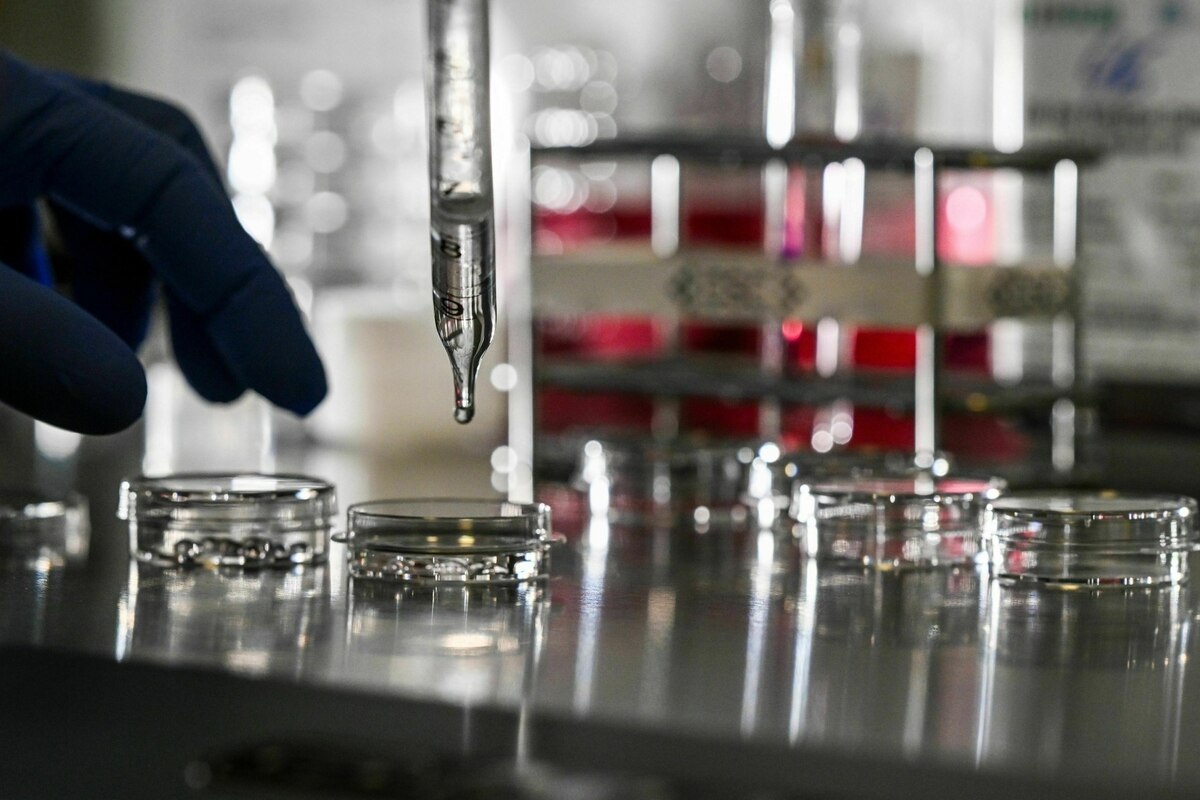
In vitro fertilization involves retrieving mature eggs from a woman after hormonal treatment and fertilizing them in a laboratory dish with the man’s sperm. After a few days, the fertilized eggs or a single egg are implanted back into the woman. ICSI is an additional method of artificial fertilization when the sperm cells cannot fertilize an egg in the fallopian tube or in the laboratory dish. In this process, a single sperm is injected directly into a previously retrieved egg using an extremely fine needle.
Since 1997, fertility treatment data in Germany have been electronically documented. Since then, more than 2.6 million treatments have been recorded. A total of 433,858 children were born following artificial fertilization.
🏳️⚧️ SHANTAY. YOU PAY. 🏳️🌈
On .de you will find an independent, progressive voice. Freely accessible, made possible by our community. All information on our website is available for free. If you can afford it, you may make a small contribution. Our readers do not have to pay, but they know that good, critical journalism does not arise from nowhere. We are very grateful for that. So that we can continue to do our journalism tomorrow, we need more support. Our next goal: 50,000 – and with your participation we can achieve it. Make a mark for and for the future of our journalism. With only 5 euros you can join!
Now support