The International Flotilla prepares its return to the Mediterranean with an operation of unprecedented scale, determined to keep open a civil channel of support to the Palestinian population and to challenge the blockade on Gaza.
The new mission, planned for spring 2026, not only markedly expands the resources mobilized, but also solidifies the Flotilla as one of the most persistent civil actors in denouncing Israel’s actions before Western public opinion.
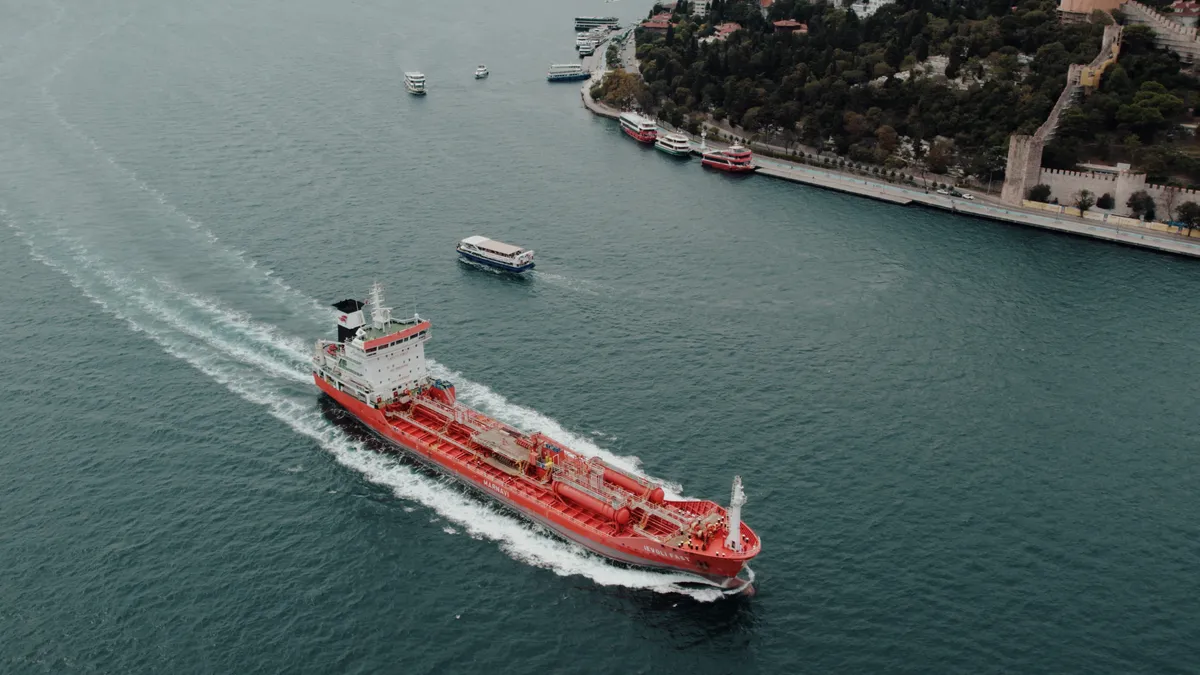
The initiative foresees the participation of more than 3,000 people from over a hundred countries and the coordinated deployment of around 100 vessels. It amounts to more than double the capacity of its last operation, intercepted last October, and responds to the conviction that the situation in Gaza has reached a level of devastation that calls for a sustained, visible response that is hard to ignore.
Since its inception, the Flotilla has had an impact that goes far beyond material aid. Although its ships have carried food, medicines and basic supplies, its main contribution has been political and communicative. For years, when the blockade on Gaza was treated in many Western countries as a secondary or inevitable issue, these missions managed to place it at the center of public debate, forcing governments and media to speak out.
This role has been especially relevant in the current context. The Flotilla has functioned as a civilian amplifier of those denunciations against the genocide perpetrated by Israel. The presence of activists, healthcare personnel, human rights observers and independent journalists has allowed conveying to Western citizens direct information about the impact of the siege and the attacks on the civilian population.
MORE THAN 1,000 HEALTH PROFESSIONALS
The new mission is based on a clear premise: it is no longer enough to enter and exit. Therefore, one of the central axes of the plan is the establishment of a sustained and specialized civilian presence. The Flotilla does not merely propose the delivery of humanitarian aid, but long-term accompaniment in basic reconstruction tasks and strengthening of civil infrastructures, especially in fields such as health, education and access to essential goods.
Against that backdrop, the planned participation of more than 1,000 health professionals stands out. The ships will be equipped with medicines, medical supplies and vital equipment, with the aim of coordinating with local personnel and alleviating, even if only partially, a health system devastated after years of blockade and continued attacks.
Emergency care and stabilization of basic services have become absolute priorities in the face of the collapse of hospitals and primary care centers. Another key element is the commitment to a form of unarmed civil protection.
The Flotilla proposes to deploy teams trained to work alongside Palestinian communities, document human rights violations and reinforce local protection and accountability mechanisms. This strategy aims to generate a sustained international presence that acts as a witness and a deterrent against attacks on civilians and civilian infrastructure, in a context of limited effective international oversight.
The diversity of profiles and origins is an essential part of the project. Participants include health professionals, technicians, lawyers, communicators and volunteers with experience in humanitarian action. This plurality reinforces one of the Flotilla’s central messages: it is not a closed ideological initiative, but a global civic response supported by millions of people who consider the normalization of Palestinian suffering unacceptable.
The accumulated impact of these missions has been felt especially in the West. The Flotilla has contributed to eroding official narratives that minimized the gravity of the situation in Gaza and facilitated the entry of legal concepts such as “genocide” into public debate.
Many solidarity campaigns, investigative journalism and local and university resolutions have drawn directly from the visibility generated by these maritime actions. The Flotilla’s return is also an amendment to institutional paralysis. While international resolutions are systematically ignored and diplomatic channels prove unable to stop the violence, organized civil society has decided to fill that void.