The geopolitical landscape in the Middle East has undergone an irreversible transformation, leaving behind the era of latent hostilities to give way to an open war with unpredictable consequences. The definitive turning point occurred on February 28 of last year with the execution of Operation “Epic Fury”, an unprecedented-scale military offensive led by a coalition between the United States and Israel.
By using B-2 stealth bombers equipped with advanced bunker-busting munitions, the operation systematically decapitated the political-military structure of the Islamic Republic of Iran. This surgical strike resulted in the elimination of the Supreme Leader, Ali Khamenei, together with the top commanders of the Islamic Revolutionary Guard Corps, triggering a power vacuum in the Shiite world and automatically activating retaliation mechanisms across the region.
SPANISH PROBLEM IN LEBANON
The ripple effect of this strategic blow did not take long to manifest through its peripheral allies. Following the directives emanating from Tehran, the Lebanese militia Hezbollah has subordinated the entire territory of Lebanon to its war aims. Since March 1, the paramilitary group has launched a sustained campaign of aggression against vital infrastructures on Israeli soil, using massive swarms of kamikaze drones and precision missiles. In this scenario of high technology and unleashed violence, the epicenter of the conflict has drawn in an international actor whose relevance is today questioned by the inertia of events: the United Nations Interim Force in Lebanon (FPNUL).
Currently, a contingent of 10,058 blue helmets from fifty distinct nations, including a core group of Spanish troops, finds itself under crossfire in what has become a strategic trap. The current situation lays bare the harsh reality of a mission that many analysts already describe as a historic failure. With an annual budget of approximately $500 million, UNIFIL represents a colossal investment of resources that does not translate into a real pacification capability.
The fundamental problem lies in the nature of its mandate, for international soldiers operate under Chapter VI of the United Nations Charter. This legal limitation means they lack the necessary military coercive authority to disarm terrorist groups by force, relegated to a role of heavily armed observers but hamstrung by international bureaucracy.
IN THE MIDST OF THE CROSSFIRE
Hezbollah has for years demonstrated a lethal mastery in exploiting these institutional weaknesses. The militia has integrated the UN deployment into its defensive matrix, instrumentalizing the presence of foreign troops as a tactical umbrella and a de facto human shield. This morally degraded strategy entails the use of zones adjacent to the international bases for positioning and launching attacks. The insurgents act on the premise that any response by the Israeli Defense Forces (IDF) that causes collateral damage to the blue helmets will trigger a global diplomatic scandal, straining Western alliances and granting the militia a supposed political advantage.
For nearly two decades, this obstruction dynamic has been the norm in southern Lebanon. Whenever UNIFIL patrols attempted inspections in areas suspected of housing arsenals, they faced resistance from organized crowds posing as unarmed civilians. This population, under militia direction, blocked routes and went as far as confiscating electronic equipment, weapons, and GPS systems from international troops. Faced with the prohibition on using force to defend their freedom of movement, UN personnel eventually adopted an accommodation stance, transforming an active military force into an almost bureaucratic entity limited to drafting reports that rarely altered the ground reality.
Today, the operational environment has shifted into what military experts call a zone of annihilation. The ballistic exchange between Israel and Hezbollah is so intense that UNIFIL has been forced to activate Level 3 alert, which in military terms is known as bunkerization. This measure entails the indefinite suspension of all operational activities, from foot patrols to critical demining tasks. The soldiers, including the Spanish, now spend large portions of their days confined to underground facilities to protect themselves from the constant rain of shrapnel and the wandering impacts of heavy artillery.
On the hazard of combat adds a logistical collapse and an alarmingly blind operational picture. Land supply routes are virtually destroyed due to the Israeli air force’s precision bombing campaign, preventing normal resupply of diesel, water, and combat rations. Moreover, the UN bases themselves have ceased to be safe sanctuaries.
The Naqoura headquarters has suffered direct hits from Israeli Merkava tanks, actions that the IDF justifies on the tactical necessity to eliminate Hezbollah snipers or anti-tank teams that exploit the blind angles of the international facilities as cover. Added to this is the constant harassment by armed drones conducting intimidation maneuvers over the blue helmets’ armored vehicles.
NECESSARY WITHDRAWAL OF THE BLUE HELMETS FROM THE AREA
The persistence of deploying under these conditions lacks military or diplomatic sense. Keeping thousands of light infantry soldiers in 2026 amid a total state-on-state clash, without artillery support, air cover, or own naval backing, constitutes a recklessness that Western governments cannot sustain. The United Nations itself had implicitly recognized the mission’s infeasibility when, in August 2025 and under Washington’s pressure, the Security Council approved Resolution 2790 to dismantle the force by the end of 2026. Yet the war’s rapid pace has rendered those administrative deadlines obsolete.
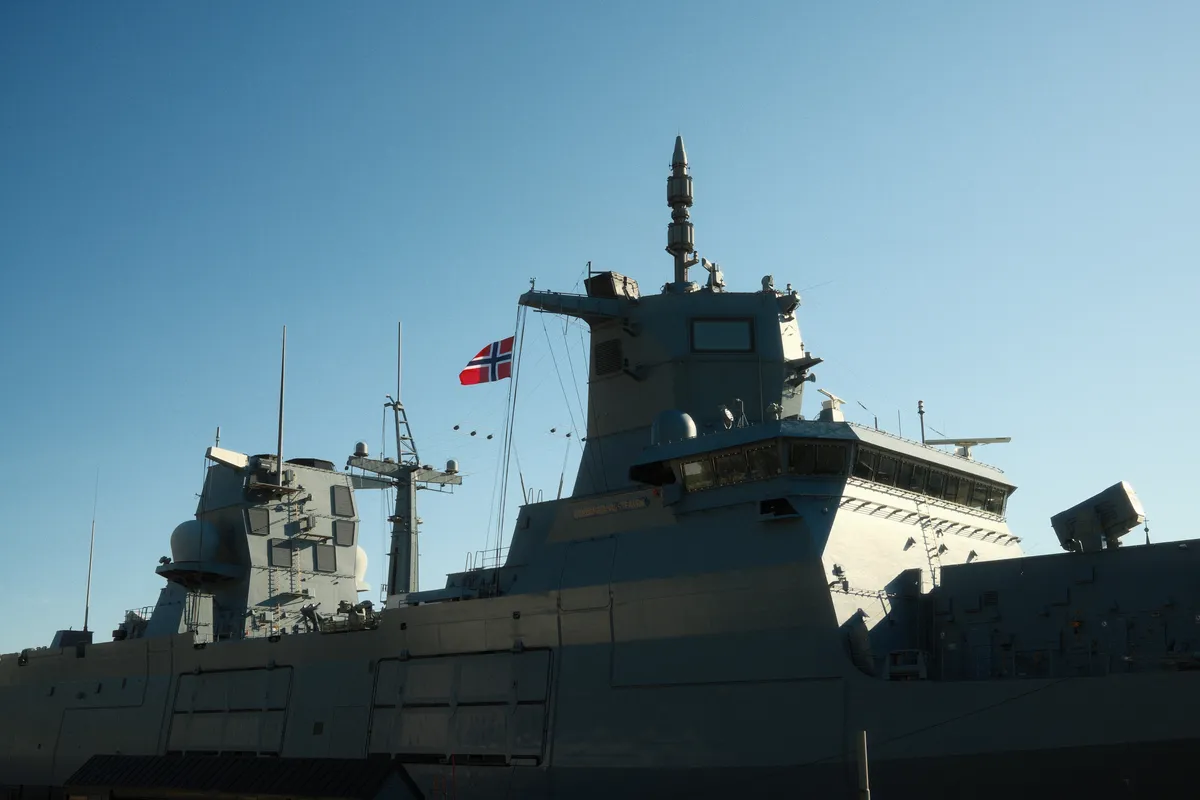
In this chaotic context, countries such as Spain and Italy have begun to demand accountability from Israel while placing their naval units on maximum alert for a possible emergency evacuation. The UN Security Council is deeply fractured and its current resolutions lack real effect on the battlefield. UNIFIL has ceased to be a deterrent and has become an untenable risk. Continuing with the mission no longer provides any advantage that could alter the region’s course, unnecessarily exposing soldiers to a massacre in a war that no longer admits passive mediators.