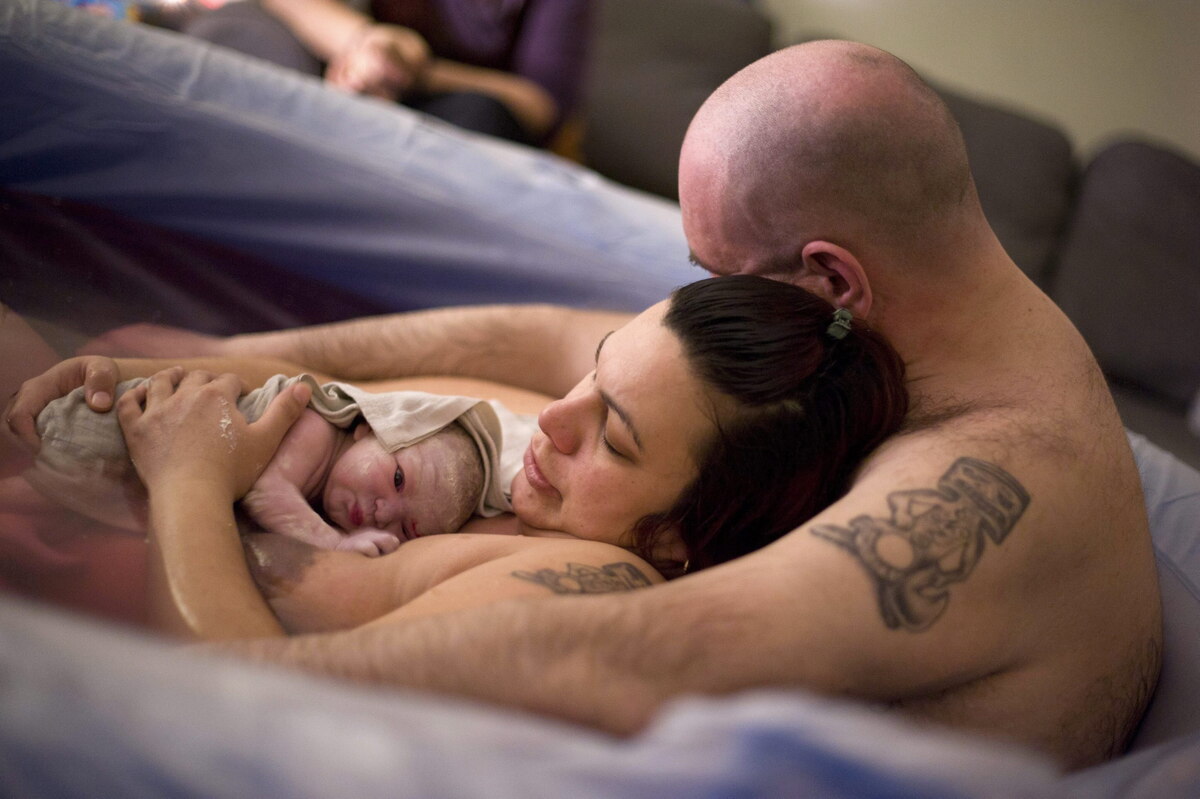
: Ms. Ensel, why are births political?
Angelica Ensel: It is not neutral how we are born. The way we treat women during birth shows what position they hold in a society.
: What does a self-determined birth look like?
Ensel: Self-determined means: The woman is at the center, she is heard and taken seriously. She is asked for her consent before she is examined; when decisions are involved, alternatives are presented to her. So that nothing happens that she does not agree to, and in the end she can say: It was a good birth, even if it may have unfolded differently than she had imagined.
In the interview: Angelica Ensel
70, a PhD in cultural studies and a midwife, spent a long time working at the Paracelsus Clinic and now, in her learning program “Dignified birth – experienced and accompanied. Birth cultures in transition” on the Hamburg Open Online University, educates.
: Can one speak of self-determined births in obstetric care in Germany?Ensel: Not at all. There are good birth places in Germany, but that depends, in addition to the philosophy of a birth clinic, strongly on the structural conditions. We have a dramatic shortage of staff; the accompanying professional groups often cannot work as they would like. Many women experience demeaning treatment and boundary violations up to violence. Not only is there too little discussion about it, there is also too little action.
: It is mainly Black and queer parents who experience violence during birth.
Ensel: But also migrants or, for instance, women with disabilities. These are intersectional topics that foster invasions/border violations.
: What must change?
Ensel: It must finally be politically recognized that women have the right to give birth to their child in a self-determined and humane manner. An investment in obstetric care is an investment in family health. A traumatic birth experience can affect a woman’s health for life, a self-determined birth can strengthen her for life. That cannot be something we ignore.
: With the Hamburg Open Online University, a free learning platform has been created that aims to enable “university knowledge for everyone.” They offer there the course “Dignified birth – experienced and accompanied.” Why are such low-threshold educational offerings needed?
Ensel: Because it is important that high-quality knowledge reaches people. In a world full of fake news and manipulation, a university stands for solid, scientifically founded knowledge. This knowledge should not be reserved only for experts, but made available to all people free and with low-threshold access. After all, the university is financed by society.
A traumatic birth experience can affect a woman’s health for life, a self-determined birth can empower her for life. That cannot be something we ignore.
: What do you hope to gain from the offering?
Ensel: The learning platform arose from the documentation of the now-closed birth ward of the Paracelsus Clinic in Henstedt-Ulzburg. There, in the 70s, women were allowed to self-determine how they wanted to give birth. The midwives and Reinhard Müller as chief physician listened to the women’s wishes. We conducted many interviews with time witnesses and experts of obstetrics to show: self-determined births are possible.
“Dignified birth – experienced and accompanied.” A low-threshold and free course of the Hamburg Open Online University. Permanently accessible at https://portal.hoou.de/.
: Were pregnant women more self-confident in the past?
Ensel: The women in the 70s and 80s were shaped by the women’s movement. They had clear ideas about how they wanted to give birth because they were convinced that giving birth is natural, something their bodies can do. In the fight against §218 and the awareness “My body belongs to me” came later also: “My birth belongs to me.” Today, women are often very unsure; this intuitive access to the body is much less present. Instead, we observe a great dependency on technology and experts. There is so much fear. Yet the woman is the expert of her body, and the goal of accompaniment should always be to empower her in that.